digri.ai · 25+ engineering colleges · Tamil Nadu
A student can spend four years
building skills. A resume
reduces it to one page.
She takes courses, ships projects, solves problems, sits assessments and gets feedback from a mentor. All of it happens somewhere. None of it stays connected. digri.ai turns that scattered activity into a living record of what she can actually do.
Founding designer, and the only designer on it.
Research · information architecture · the digital profile · the student, mentor and administrator surfaces · the AI interaction model and all of its states · the design system · developer handoff.Learning is continuous. Proof is fragmented.
The evidence exists. It just never lands in one place.
10,000 students.
Nobody can hold that much growth in their head.
A profile, not a document.
Four faces of one record, fed by everything she does.
25+ colleges, in daily use.
Across Tamil Nadu, co-branded per campus.
A living record of what a student can actually do.
Not a document she writes about herself once a year. A record that updates itself every time she finishes something, and that names where each line came from.The proof was everywhere.
The resume kept almost none of it.
Follow one student through a semester. She finishes a course. She ships a project and a tool reports back on its code quality. She solves two hundred problems on a practice platform. She sits an assessment. A mentor reviews her work and tells her what to fix.
Every one of those is evidence of capability, and every one of them lands in a different system.
Then she applies for a job, and all of it collapses into one page that says she knows Python.
What she actually did
And then it all had to fit in here.
- Degree
- Skills
- Projects
- Certificate
The student was learning continuously. The evidence was in pieces.
One mentor.
Five hundred students.
A mentor is the one person who could hold the whole picture. He knows which student is struggling, what she tried last month, whether she is getting better.
Except he has hundreds of them. He teaches, he marks, he sits on committees. He cannot remember five hundred trajectories, and nothing in front of him remembers on his behalf.
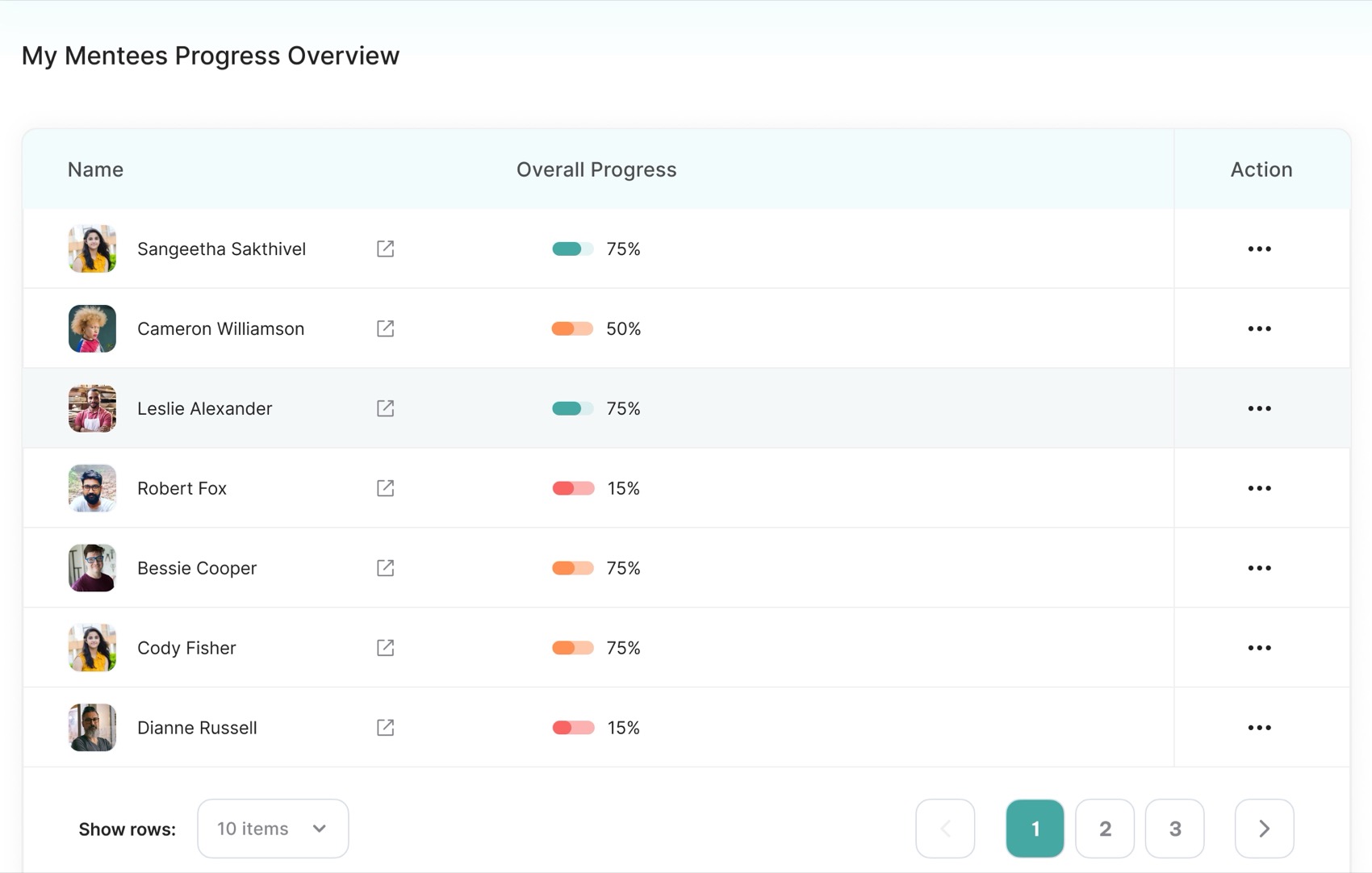
So the first thing I designed was a list of names. Not a chart. Names, in rows, with the one number that matters sitting next to each.
The only number a mentor acts on
Every roll-up in the product, for all three roles, collapses to this one scale. Same band whether you are looking at one student, one class or one campus.
Then five hundred became ten thousand, across twenty five colleges.
At that size the problem changes shape. It is not that there are too many students to look at. It is that a person's growth has to become a system, or it does not exist.
Nobody can remember ten thousand journeys. So the product had to.
So we stopped treating
the resume as a document.
We made it a profile.
One record per student, that nobody writes. It assembles itself out of what she does: what she learned, what she built, what she was assessed on, what a mentor observed, and how all of that changed over time.
Two details in the header carry the whole idea. Last updated 2 days ago, because a record that stops updating is just a document again. And View as: Public, because she decides what a stranger gets to see.
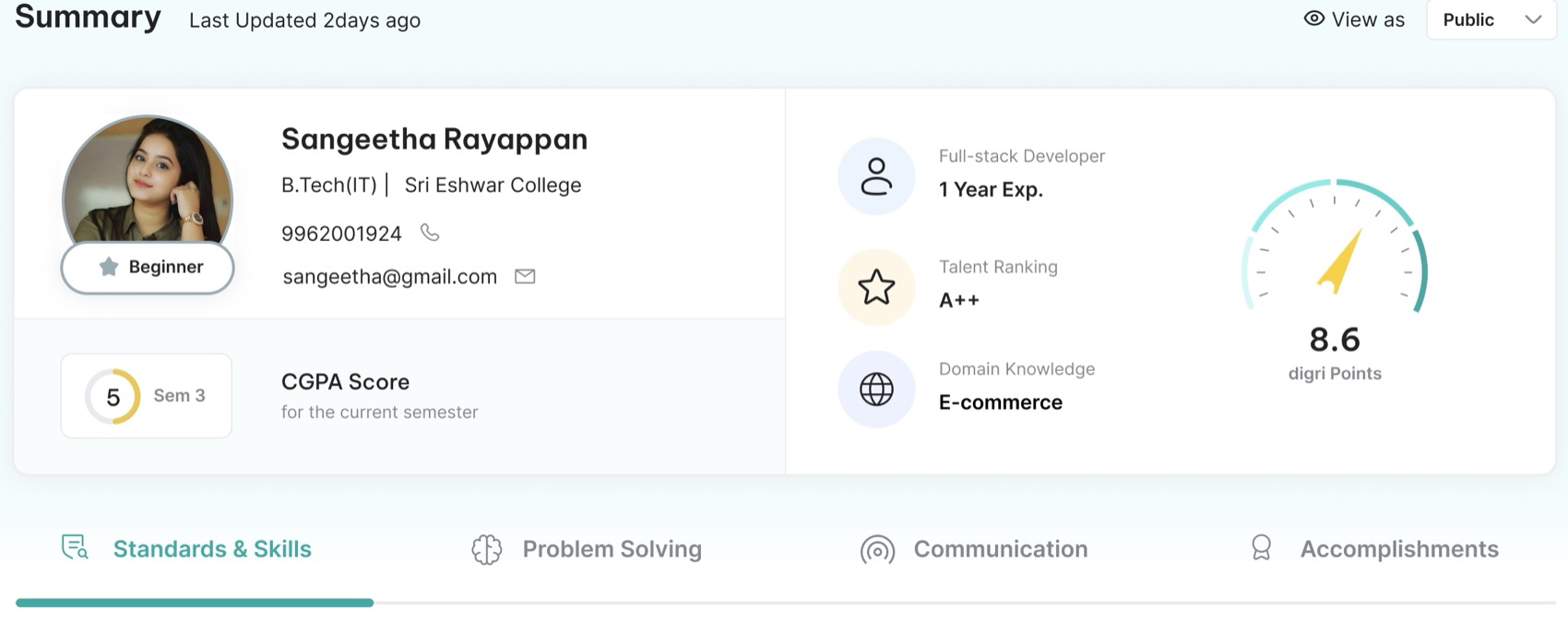
One student, one record, four faces. The gauge is not a grade she was given. It is a running total of everything underneath it.
Not a resume builder. A record that builds itself.
Four faces of
one record.
Each tab answers a different question an employer would actually ask. Open them.
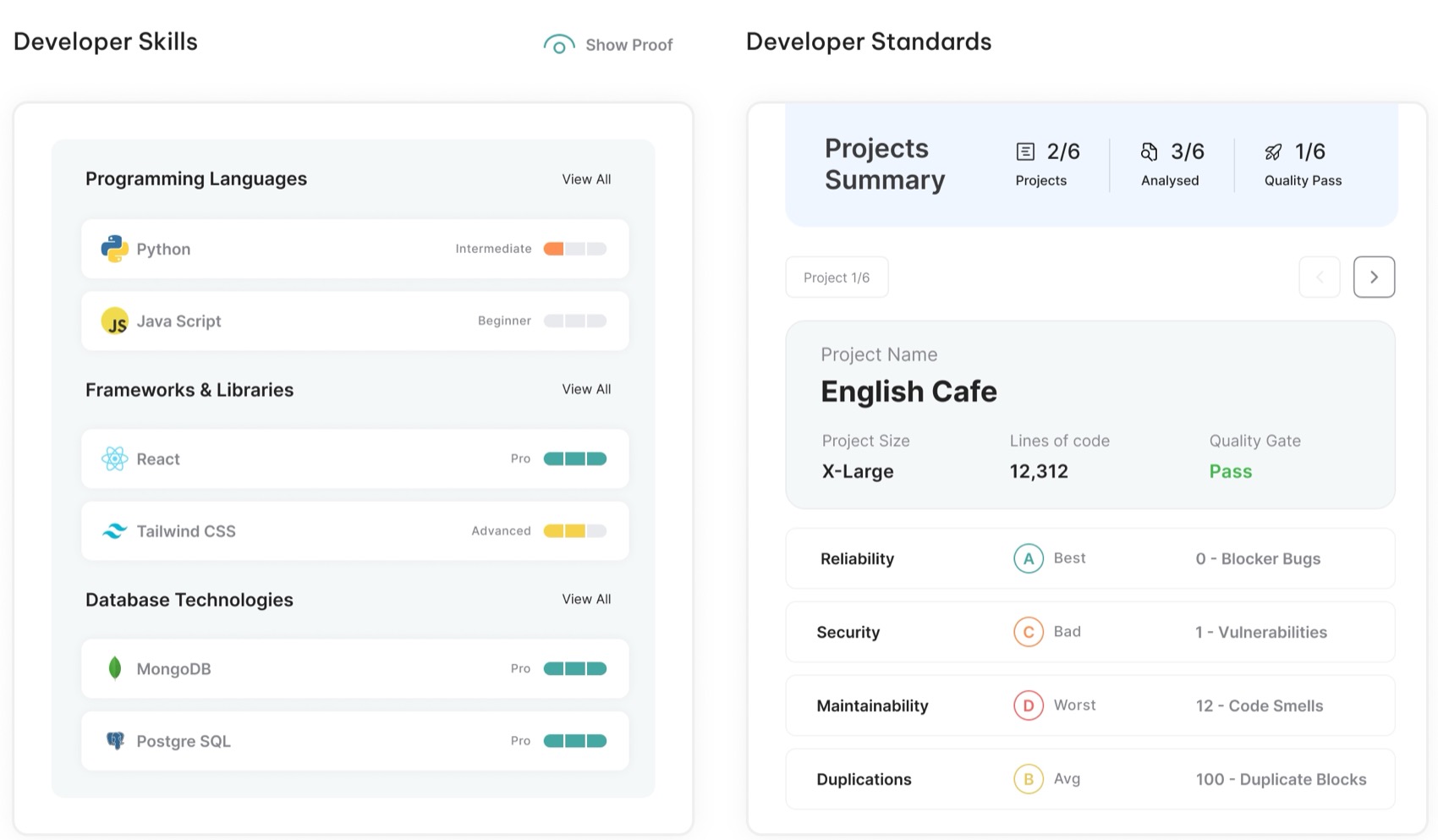
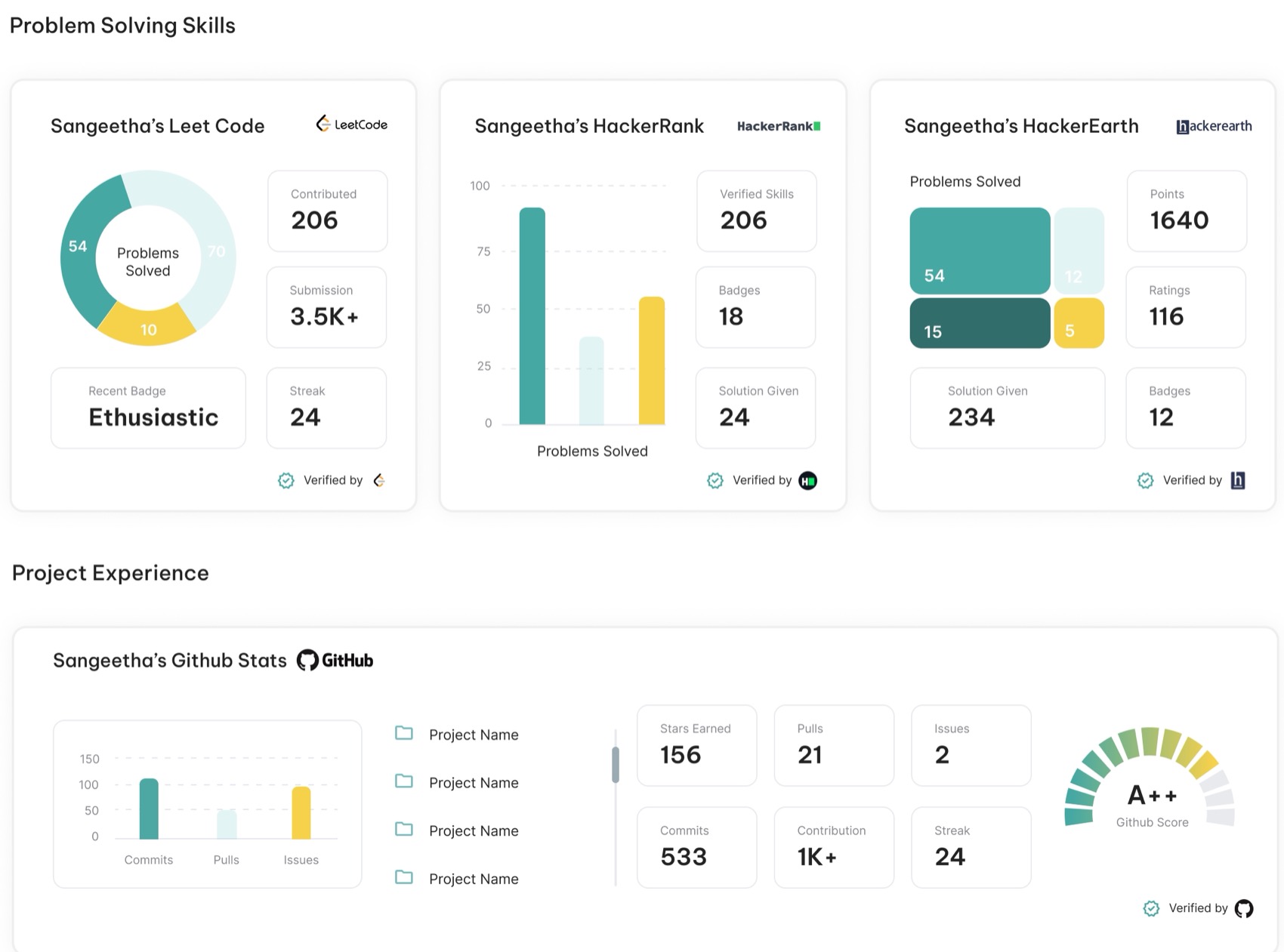
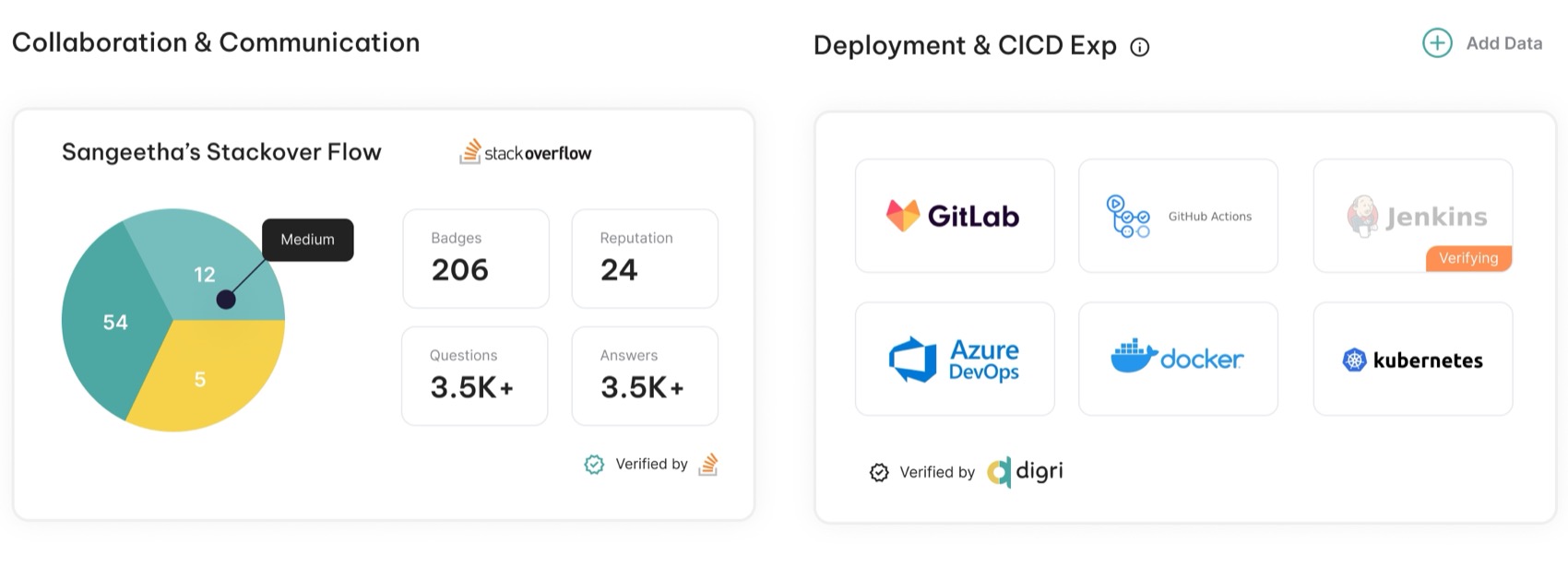
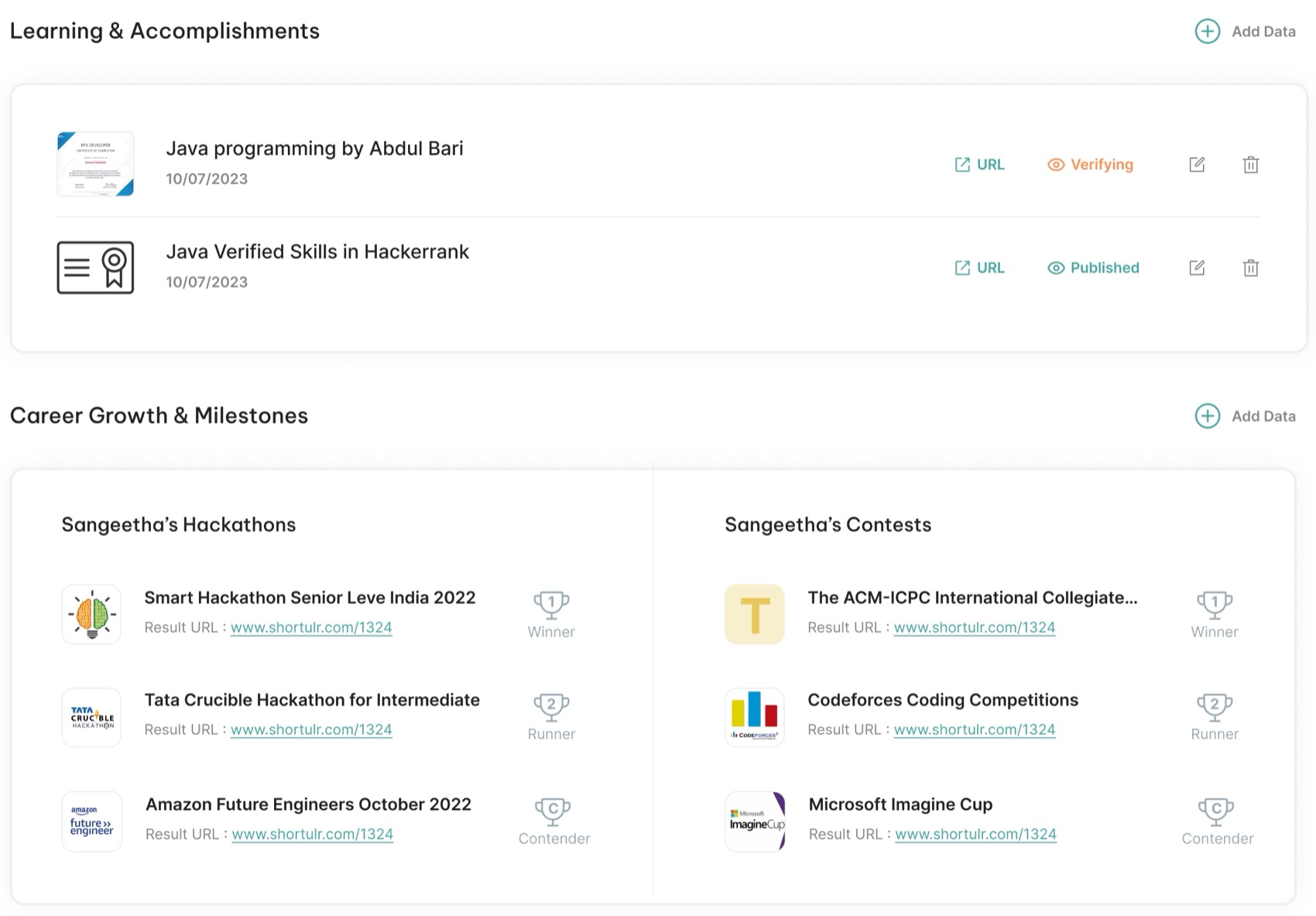
A skill is more credible when you can see the evidence behind it.
Everything she does
feeds it.
The rest of the product is not a set of features. It is the supply chain for one profile.
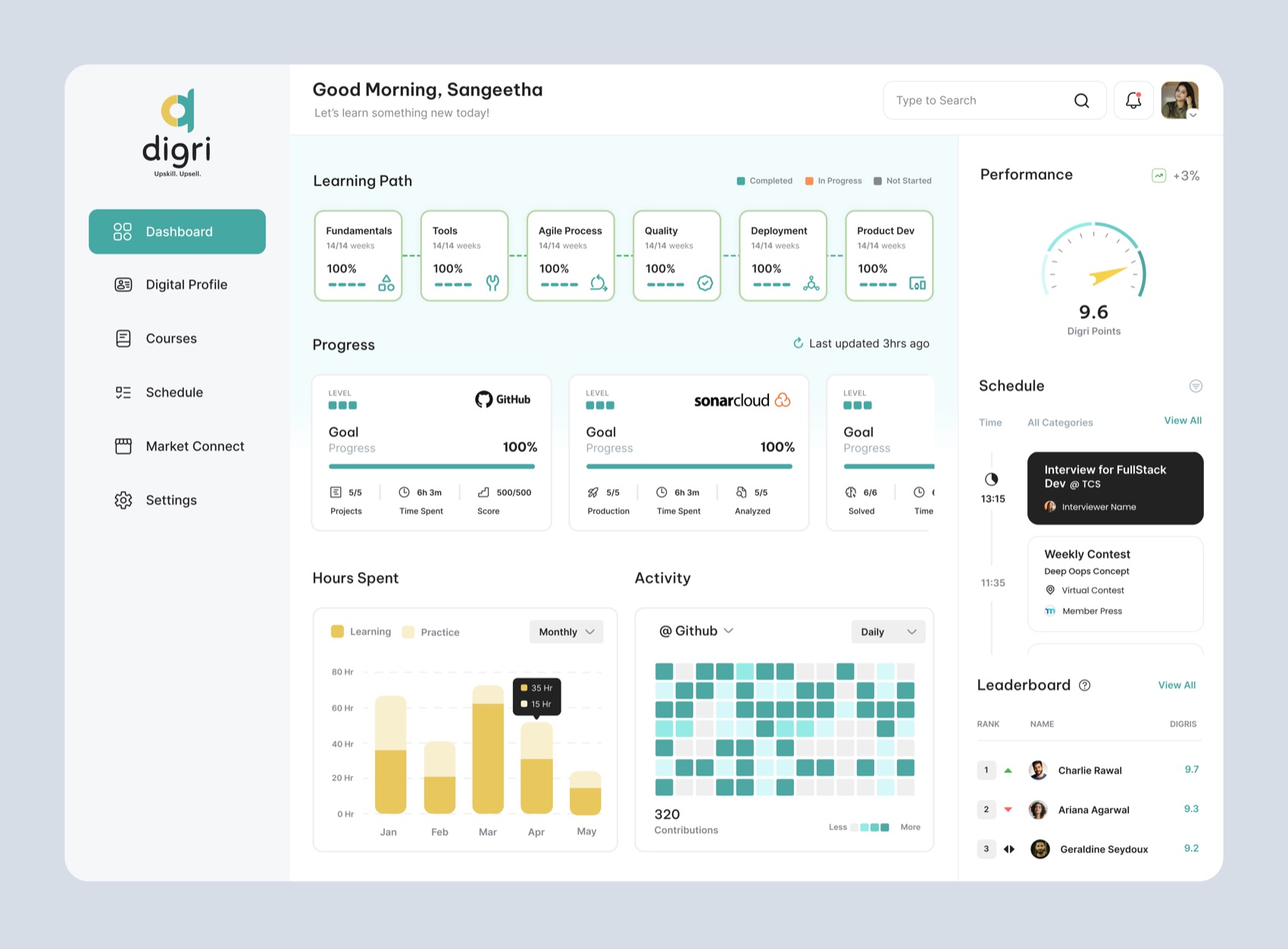
Learning, on the way to becoming proof. Six stages in order, hours spent, contributions, and the platforms she is being measured on. Everything on this screen ends up on the profile.
Assessment is the one that needed the most care, because an assessment result is the harshest thing on the profile. If a machine marks her work and gets it wrong, that error follows her into an interview.
So a verdict is never a single number. It breaks into named axes, and the model has to show its own attempt beside hers.
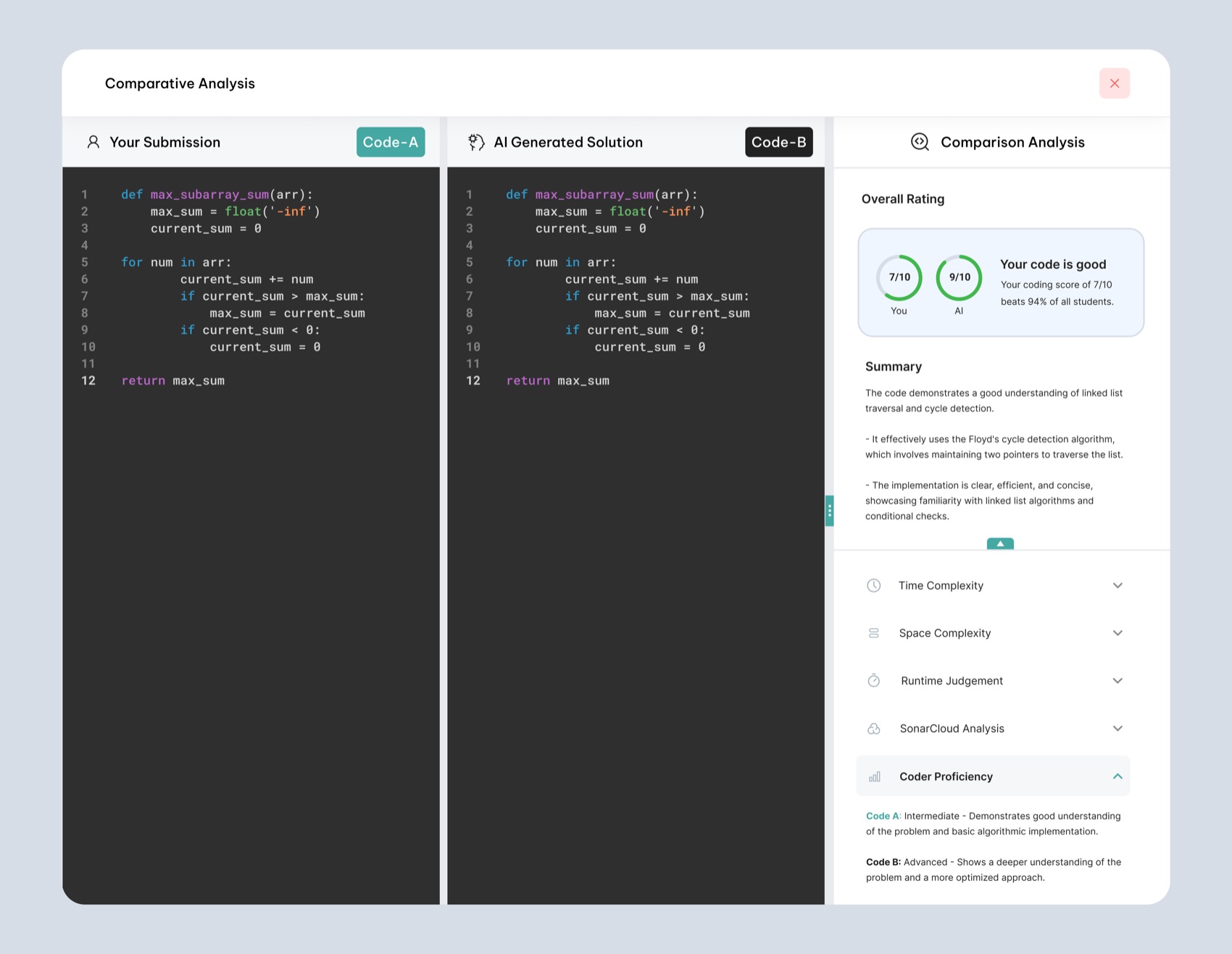
Code A is hers. Code B is the model's. Nobody can argue with a number. Anybody can argue with a claim about their own time complexity.
Every assessment adds a piece of evidence, so every assessment has to be defensible.
The AI is the plumbing,
not the point.
Ten thousand students need questions written and work marked. A model does that so the profile can stay current. It is never the thing on display.
Two rules kept it in its place. The model drafts and a person decides, so nothing it writes reaches a student unread. And when it does not know, it says so, because a profile built on invented signals is worse than no profile.
A mentor describes the question he wants through nine fixed fields rather than a chat box, which keeps difficulty comparable between one college and the next. Press generate.
Nine fields do the prompting. The free text box is last, and optional.
Please wait…
while we generate the question for you, this will take around 30 secs
Generated question · coding
Fill the form, then press generate. This is the real flow.
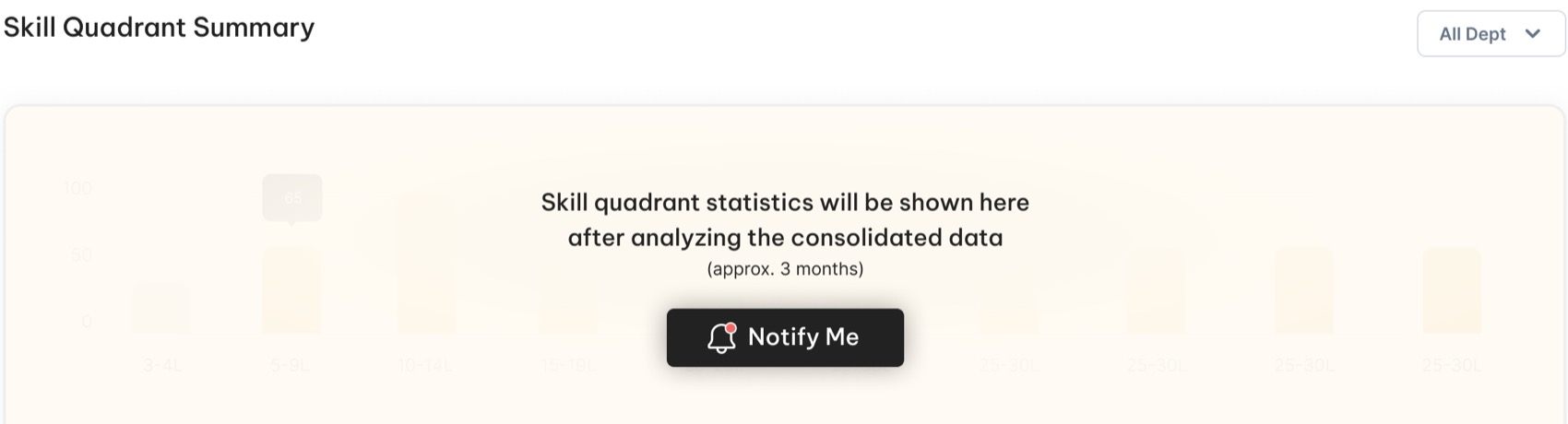
And the screen I would defend hardest. This panel needs a term of data before it means anything, so it shows nothing, says how long, and offers to tell you when it is ready.
Fill the empty chart with whatever data we had. Even a sparse chart looks like a working product in a demo.
Nothing, and a date. People trust charts. One built from three weeks of noise would have been believed, and acted on, by somebody deciding a student's placement.
A profile is only worth carrying if none of it was invented.
The student builds it.
The mentor gives it context.
The mentor is not just marking assignments any more. He is looking at where a student started, what she has worked on since, and where she is slipping, which is the context a number on its own never has.
And when she applies for something, she does not rebuild any of it. She flips one control to Public and sends the record as it stands that day.
Seven places a claim can come from. On the public view, whoever is reading can follow every one of them back to its source.
There is no separate employer product here, and that was the right call. Building a recruiter dashboard would have meant asking companies to adopt a new tool. The public profile is the employer experience: one link, current, with every claim traceable. The student stays the one who owns and shares it.
She is not asking to be believed. She is asking to be checked.
And the ones I got wrong first
What changed.
No percentages. Only what can be counted.
A resume became a living profile, updated every time she learned, built, was assessed or was reviewed.
I did not instrument the funnel, so I cannot tell you digri.ai improved placement rates or cut a mentor's week by a measurable amount. Nobody measured it. What I can point at is the deployment: twenty five campuses chose to keep running it, and ten thousand students open it on an ordinary day. Retention at that size is the number I would trust anyway.
Co-branded per campus. All screens carry sample data.
A student's work should not
disappear into a resume.
Last updated 2 days ago. Four years of work, still moving.